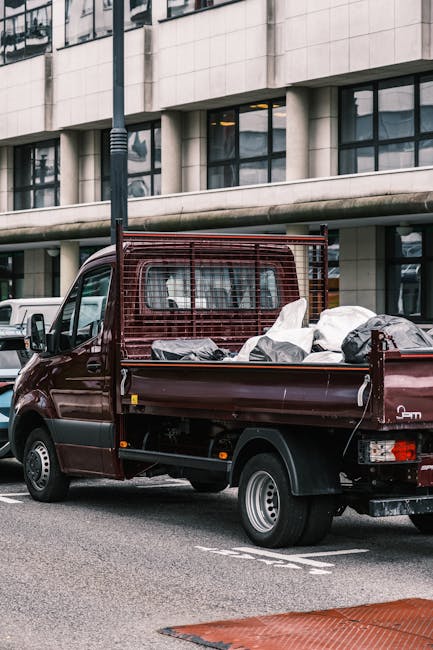
Rubbish pickups Upminster Bridge St Laurences Road: a practical local guide to fast, tidy waste removal
If you are looking into rubbish pickups Upminster Bridge St Laurences Road, you are probably dealing with one of those jobs that starts small and then suddenly takes over the hallway, the garden, or half the driveway. A broken wardrobe. Builders' offcuts. An overflowing garage. Maybe just a pile of mixed junk that has been annoying you for weeks. Whatever the trigger, the goal is usually the same: get it gone quickly, safely, and without turning your day into a hassle.
This guide explains how local rubbish collection and waste pickup services typically work around Upminster Bridge and St Laurences Road, what to expect, how to choose the right option, and which mistakes are worth avoiding. It also covers practical UK best practice, common clearance scenarios, and the little details that make a big difference on the day. To be fair, the small details are often the ones people only notice once things have already gone wrong.
Table of Contents
- Why Rubbish pickups Upminster Bridge St Laurences Road Matters
- How Rubbish pickups Upminster Bridge St Laurences Road Works
- Key Benefits and Practical Advantages
- Who This Is For and When It Makes Sense
- Step-by-Step Guidance
- Expert Tips for Better Results
- Common Mistakes to Avoid
- Tools, Resources and Recommendations
- Law, Compliance, Standards, or Best Practice
- Options, Methods, or Comparison Table
- Case Study or Real-World Example
- Practical Checklist
- Conclusion
- Frequently Asked Questions
Why Rubbish pickups Upminster Bridge St Laurences Road Matters
Rubbish pickup matters because waste has a way of becoming a bigger issue than it first appears. A few sacks left outside can attract attention, clutter access, and make a property feel untidy. In a busy residential area, that can affect neighbours as much as it affects you. If you are trying to sell a property, manage a rental, prepare for decorators, or simply get your space back, a prompt pickup can change the whole feel of a place almost immediately.
There is also the safety side. Loose rubble, sharp broken items, old appliances, and damp cardboard can all create trips, stains, and unpleasant smells. You know the sort of thing: you open a back door and get hit with that stale, dusty smell of old furniture and wet packaging. Not dramatic, just annoying enough to keep getting in the way.
For households and local businesses alike, organised rubbish removal is also about avoiding unnecessary stress. Instead of waiting for a long back-and-forth process, many people prefer a direct collection where the crew loads everything, sorts what can be recycled, and leaves the area swept through. That is especially helpful on roads where parking, access, and timing all matter.
If the waste is mixed, bulky, or awkward, a service that understands residential access and careful loading is often the simplest route. And if you need more than a one-off collection, it helps to look at broader services such as waste removal or a more specific clearance option depending on what needs shifting.
How Rubbish pickups Upminster Bridge St Laurences Road Works
In most cases, the process is straightforward. You describe the waste, the team estimates the volume or type, a time is arranged, and the rubbish is collected from the property or kerbside. Simple on paper. In practice, the quality of the experience depends on how clearly the job is scoped before anyone turns up.
For typical domestic pickups, the crew will ask what kind of waste is involved: general household junk, furniture, garden waste, builders' debris, appliances, or a mixed load. This matters because different waste streams may need separate handling. For example, a rusty fridge is not the same as old office paper, and plasterboard is not the same as sofa cushions. Mixed loads are common, but they still need sensible sorting.
Many jobs are done as a same-day or next-day collection if access and availability line up. Others are booked in advance, especially where there is a larger load or a property with tricky access. If you are clearing a flat, loft, or garage, the team may ask for photos first so they can judge stairs, narrow hallways, and loading time. That little step can save a lot of confusion later.
A good service normally includes loading, transport, and disposal. If relevant, it may also include items being separated for recycling where practical. If you are comparing providers, it is worth looking at whether they explain pricing clearly through their pricing and quotes information and how they handle payment and security. Those details matter more than people think, especially when the job is urgent.
For bulky household items, there may be specialised collection routes too, such as furniture disposal, mattress and sofa disposal, or fridge and appliance removal. Matching the service to the waste is usually the neatest way to avoid delays.
Key Benefits and Practical Advantages
The obvious benefit is convenience, but there is more to it than that. A good rubbish pickup removes the clutter and the decision fatigue at the same time. You do not have to sort out transport, enlist a friend with a van, or spend a wet Saturday making repeated tip runs. Let's face it, there are better ways to spend a Saturday.
Another advantage is speed. If you need access cleared before a delivery, a move, or a decorating job, a rapid collection can keep everything else on schedule. That is especially useful for local businesses and landlords, where one delay can ripple into the next trade booking or tenant handover.
There is also a practical cleanliness benefit. Once the waste is removed, rooms feel larger, lighter, and easier to use. A garage can become a garage again instead of a storage graveyard. A spare room can actually be used for guests or work. A garden can breathe a bit more. Small win, big relief.
From an environmental point of view, responsible pickup can also help keep recyclable materials out of the wrong bin stream. Good providers will usually separate wood, metal, cardboard, green waste, and some appliances where possible, supporting better reuse and recycling outcomes. If sustainability matters to you, it is worth checking a provider's recycling and sustainability approach before booking.
One more thing: a tidy clearance reduces the chance of mistakes by builders, movers, or decorators. When an area is clear, people work faster and with fewer "sorry, where do I put this?" moments. Those little interruptions add up.
Who This Is For and When It Makes Sense
Rubbish pickups in this part of Upminster are useful for a surprisingly wide range of people. Homeowners often need them after a declutter, a garden tidy-up, or a mini renovation. Renters use them when moving out, especially if they have accumulated items that are awkward to transport. Landlords and letting agents use them between tenancies, often with a tight turnaround and zero appetite for mess left behind.
Businesses need them too. Offices replacing furniture, shops clearing packaging waste, and local trades managing leftover materials all benefit from a pickup that is quick and predictable. If waste is generated by ongoing operations rather than a one-off event, it may make sense to consider business waste removal instead of a single ad hoc collection.
There are also situations where the waste is not just rubbish in the everyday sense. A loft full of old storage items, a garage stuffed with tired equipment, or a house clearance after a family move all need a more careful, room-by-room approach. In those cases, broader services like home clearance, house clearance, flat clearance, or loft clearance may fit better.
And if your problem is more specific than a general tidy-up, that is fine too. Many people only need help with one category: a shed load of garden cuttings, a garage full of broken things, or a few bulky items that are impossible to shift alone. There is no prize for making it more complicated than it needs to be.
Step-by-Step Guidance
If you want the smoothest possible pickup, a bit of prep goes a long way. Here is the simplest way to approach it.
- Identify the waste clearly. Make a rough list of what needs removing. Is it mixed rubbish, old furniture, builder's waste, green waste, or appliances? Photos are often more useful than a long explanation.
- Separate anything sensitive. Keep documents, valuables, medication, keys, and personal items out of the load. People forget this more often than they should.
- Check access. Think about parking, narrow gates, stairs, basements, and front-door clearance. If there is a tight turn or limited space, say so early.
- Ask about item-specific handling. Fridges, mattresses, sofas, and certain waste types may need specialist handling. If in doubt, mention them before booking.
- Confirm the booking details. Make sure the time, location, collection method, and payment expectations are all clear.
- Keep the route clear on the day. If possible, move cars, open gates, and create a straightforward path to the waste.
- Do a final check before loading starts. This is the last chance to pull out something you meant to keep. Happens all the time.
One practical tip: if you are clearing several rooms, group items by type in advance. It helps the team load faster and can make recycling easier. For example, keep wood together, metal together, and soft furnishings separate if you can manage it. It does not need to be perfect, just sensible.
If you are unsure what can go, a useful reference point is the site's guide on what can go in a skip. Even if you are not using a skip, the principles are still helpful for understanding what is usually accepted, what needs special care, and what should be flagged in advance.
Expert Tips for Better Results
The best rubbish pickups are usually the ones where the customer has thought through the awkward bits in advance. Not the obvious waste. The awkward bits.
Tip one: photograph the load from more than one angle. One shot of the pile is useful, but a few angles give a better sense of depth, access, and actual volume. A pile can look small until you stand next to it and realise it is hiding a second pile behind it. Funny how that works.
Tip two: be specific about heavy items. A single wardrobe is different from a wardrobe, chest of drawers, and bed frame. A broken dishwasher is different from a load of loose packaging. The more precise you are, the fewer surprises on the day.
Tip three: say whether the waste is indoors or outdoors. A pile in the front garden is quicker to remove than items in a top-floor flat with no lift. That one detail can change timings quite a lot.
Tip four: keep hazardous items separate. If you have chemicals, paint, solvents, batteries, or suspect materials, flag them early. Some items require specialist handling under hazardous waste disposal procedures and should not be mixed casually with general rubbish.
Tip five: ask what happens after collection. Responsible waste services should be transparent about sorting, transfer, and disposal routes. You do not need a lecture. Just a clear answer.
Tip six: choose the right service shape. If you only need a few bulky items removed, a targeted collection may be enough. If the job is broad and room-based, a clearance service may be more efficient. That distinction saves time and avoids paying for the wrong kind of help.
Common Mistakes to Avoid
People often make the same few mistakes, and none of them are hard to avoid once you know what to watch for.
- Underestimating volume. The most common one. A pile looks manageable until the collection starts and more bags appear from behind a sofa.
- Not mentioning access problems. If parking is tight or the property has awkward stairs, say so. A short note early can prevent a long delay later.
- Mixing ordinary rubbish with special items. Appliances, mattresses, and hazard-prone waste may need separate handling. Keep them identified.
- Leaving personal items inside furniture. Drawers, cupboards, and old bags are full of forgotten bits. Check first.
- Choosing only on price. Cheapest is not always best, especially if you need reliability, care, or same-day response.
- Forgetting about documentation. If you are a business, or if the waste is from commercial activity, records and responsible disposal matter.
There is also a subtle mistake people make: they assume all waste pickup is identical. It is not. A garden tidy, an office strip-out, and a loft clearance all need a slightly different approach. The right match makes the day run smoothly. The wrong one can feel clumsy, even if the team is well intentioned.
Tools, Resources and Recommendations
You do not need specialist equipment for most rubbish pickups, but a few simple tools can make prep easier.
- Strong gloves for handling sharp edges, splinters, and dusty items.
- Bin bags or rubble sacks for loose waste and small fragments.
- Marker pens for labelling items to keep, donate, or remove.
- Tape or straps to bundle timber, poles, or awkward materials safely.
- A phone camera for taking clear photos of the waste and access route.
- A measuring tape if you need to estimate large items or squeeze through a narrow hall.
For service selection, the most useful resources are often the provider's own information pages. If you need an overview of the company and how it works, start with the about us page. If you are ready to arrange a collection, the book online option can be the quickest route. And if you want reassurance about how a service treats customer data, the privacy policy and terms and conditions are worth a read.
For households dealing with furniture-heavy jobs, the relevant service pages can help you narrow things down faster: furniture clearance for mixed furniture loads, or furniture disposal where the task is more item-specific. Same idea for special materials like appliances or soft furnishings. It is about matching the job to the route, not just booking the first thing you see.
Law, Compliance, Standards, or Best Practice
Waste removal in the UK sits within a framework of common-sense responsibility and legal duty of care. You do not need to be a compliance expert to get this right, but you do need to be careful. In plain English: if you produce waste, you should take reasonable steps to ensure it is handled by an appropriate party and not just dumped somewhere improper.
For domestic customers, the practical focus is usually on making sure items are described honestly and separated where necessary. For businesses, the bar is often higher. You may need to be more structured about record-keeping, segregation, and confirming that waste is transferred responsibly. If confidential papers are involved, a specialised route such as confidential shredding may be the right choice.
Best practice also means being upfront about hazardous or awkward materials. Some waste types cannot simply be thrown in with the rest. Things like chemicals, certain electronic components, and contaminated items may need extra care and should be flagged before collection. If a provider explains their approach clearly, that is usually a good sign. It shows they are thinking beyond the pickup itself.
Health and safety matters too. Clear access, safe lifting, and sensible loading methods reduce the risk of injury and property damage. If you are comparing providers, the presence of a clear health and safety policy and insurance and safety information is reassuring, especially for larger or more complex jobs.
For trade and refurbishment work, a builders waste clearance service is often a better fit than general rubbish pickup, because building debris tends to be heavier, dustier, and more restrictive in what can be moved together. That distinction is easy to miss, but it matters.
Options, Methods, or Comparison Table
There are several ways to deal with unwanted waste, and the best one depends on what you are moving, how quickly you need it gone, and how much handling you want to do yourself.
| Method | Best for | Strengths | Trade-offs |
|---|---|---|---|
| Rubbish pickup | Mixed household waste, bulky items, quick clearances | Fast, convenient, little effort from you | May cost more than DIY disposal |
| Skip-style approach | Ongoing waste from a project | Useful for jobs spread over days | Requires space and loading by you |
| Self-transport to a disposal point | Small amounts of manageable waste | Can be practical for light loads | Time-consuming, vehicle needed, multiple trips |
| Room-by-room clearance | Lofts, garages, flats, whole homes | Efficient for larger declutters | Requires more planning and access checks |
For many local residents, the choice comes down to effort versus speed. If you have one van-load of mixed stuff and want it gone today, a pickup is often the cleanest solution. If your project will keep producing waste over several days, a different method may fit better. And if you are still undecided, that is normal. The right option usually becomes obvious once you picture the waste on the driveway and ask, "Do I really want to move all this myself?"
Case Study or Real-World Example
Here is a realistic example. A household near St Laurences Road had three separate problems at once: a broken three-piece sofa, a garage full of old boxes, and a pile of garden waste left after a weekend tidy-up. Individually, none of it felt too dramatic. Together, it filled the side of the property and made access awkward.
Instead of trying to move everything in stages, they grouped the waste into clear sections: soft furnishings, cardboard and mixed household junk, and green waste. They took a few photos, checked the route to the front access, and booked a collection with a rough description of the load. On the day, the team removed the items in one visit, and the property felt usable again by lunchtime. Not glamorous, but incredibly satisfying.
The useful lesson here is not that every job looks the same. It is that a little prep can turn a messy clear-out into a tidy, predictable pickup. Most people don't need perfection. They just need a plan that works.
Practical Checklist
Use this before your collection day.
- Confirm what needs removing and what must stay.
- Separate personal papers, valuables, and sensitive items.
- Take photos of the waste and the access route.
- Flag heavy, awkward, or hazardous items early.
- Check parking, gates, stairs, and any narrow points.
- Bundle loose items where it is safe to do so.
- Keep the collection area as clear as possible.
- Ask how the waste will be handled after loading.
- Review the provider's service details, pricing, and terms.
- Make sure someone is available if access or decisions are needed on arrival.
If the job is bigger than you first thought, that is fine. It happens. Better to adjust the plan early than to discover halfway through that you need a completely different sort of service.
Get a free quote today and see how much you can save.
Conclusion
Rubbish pickups Upminster Bridge St Laurences Road are really about making life easier in a way that feels practical, not theoretical. The best service is the one that fits the waste, the access, and the timing without creating more work for you. Whether you are clearing a single bulky item or an entire room of mixed clutter, a thoughtful approach saves time, protects the property, and keeps the process calm.
If you remember only one thing, make it this: describe the load clearly, think about access early, and match the service to the job. That is usually the difference between a straightforward collection and a frustrating one. And once the space is clear, you notice how much lighter everything feels. A bit less noise. A bit more room. Sometimes that is all people were after in the first place.
Frequently Asked Questions
What is included in a rubbish pickup in Upminster Bridge St Laurences Road?
Most rubbish pickups include loading, transport, and responsible disposal of the waste you have described in advance. Some jobs also involve basic sorting for recycling, especially where the load contains mixed materials. The exact scope depends on the provider and the type of waste.
Can I book same-day rubbish pickups?
Often yes, if the provider has availability and the job details are clear. Same-day bookings tend to work best for straightforward collections with good access. If the load is large, mixed, or awkward, next-day or scheduled pickup may be more realistic.
Do I need to move the rubbish to the kerb before collection?
Not always. Many services can remove waste from inside the property, a garden, a garage, or a loft, provided access is safe and agreed beforehand. If the items are already outside, that can make the pickup faster, but it is not usually essential.
What types of waste are commonly collected?
Typical collections include household junk, furniture, garden waste, builder's debris, appliances, cardboard, and mixed declutter waste. Some items, such as fridges or mattresses, may need specific handling, so it is best to mention them early.
How do I know whether I need general rubbish removal or a specialist service?
If your waste is mixed and fairly ordinary, general rubbish removal may be enough. If the job is furniture-heavy, appliance-heavy, builder-related, or involves a whole room or property, a specialist clearance service is often better suited. The clearer the match, the smoother the booking.
What should I do with hazardous items?
Hazardous items should be flagged before any collection. That includes chemicals, solvents, certain batteries, and other materials that need special handling. Do not mix them into general waste unless the provider has explicitly said it is safe and appropriate to do so.
Is rubbish pickup suitable for flats and upper-floor properties?
Yes, provided the access is safe and the provider knows what to expect. Flats can take a little more planning because stairs, lifts, and shared entrances can affect loading time. If you are in a flat, describe the access clearly when you book.
How can I reduce the cost of a collection?
Clear the load in advance, separate waste where it makes sense, and provide accurate photos or descriptions. The fewer surprises on arrival, the more efficient the job tends to be. In practice, good preparation is often the easiest way to keep costs sensible.
What happens to the rubbish after it is collected?
That depends on the material and the provider's process. In general, waste is taken for sorting, recycling where possible, and disposal through the appropriate route. If sustainability matters to you, ask about the provider's recycling and waste-handling approach before booking.
Do I need to be at home during the pickup?
Usually yes, or at least someone should be available if access or decisions are needed. Some jobs can be arranged with very clear instructions, but it is safest to have a responsible person present, especially if the waste is mixed or if there is any doubt about what should go.
What if I am not sure how much rubbish I have?
That is very common. Photos are the easiest way to estimate volume, and a quick description of the items helps too. If you are unsure, try to show the waste from several angles and mention whether it is loose, bagged, stacked, or spread across a room.
Where can I find more information before booking?
The most useful starting points are the provider's service and policy pages, especially if you want to understand pricing, safety, and how collections are handled. If you are ready to go ahead, booking information is usually the next sensible step. Small bit of admin, yes, but it saves a lot of faffing later.